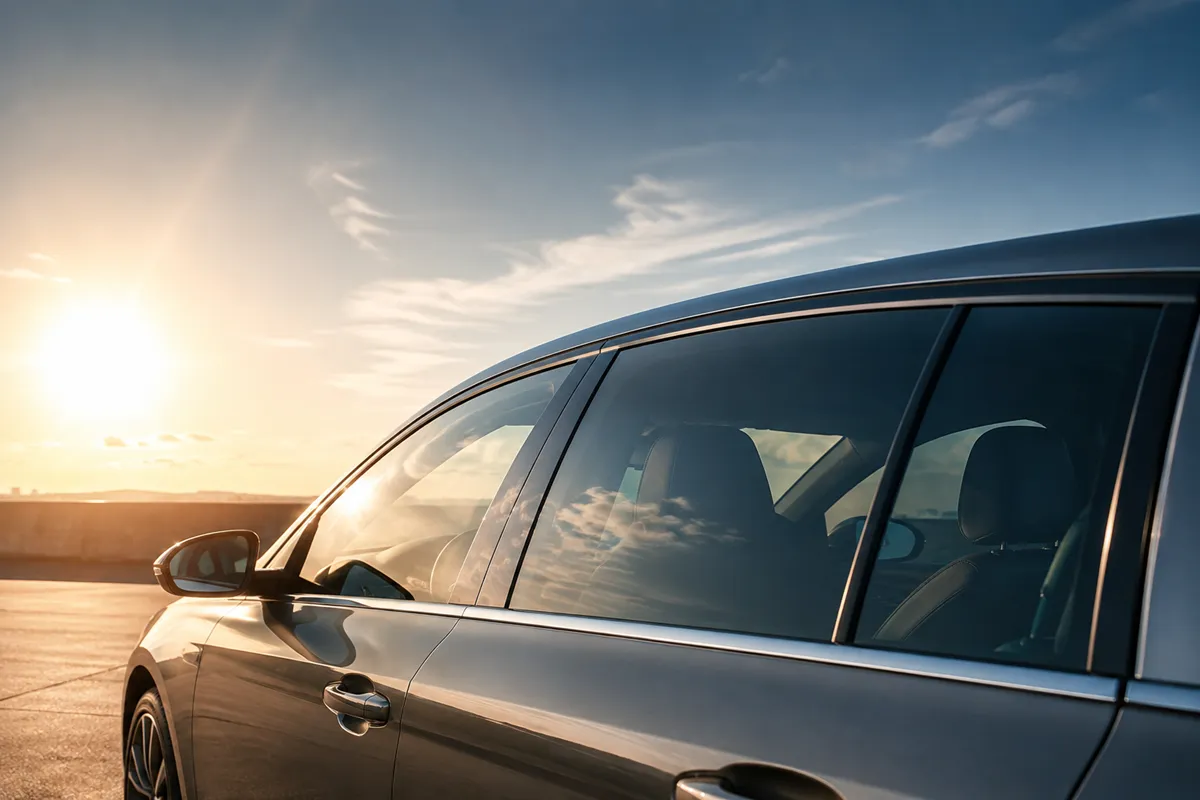
Does Darker Window Tint Actually Mean Better Heat Protection?
When your car feels like an oven after sitting in the Georgia sun, choosing darker window tint can seem like the obvious solution. Less light comes through the glass, so it should mean less heat too, right?
Not necessarily.
Tint darkness and heat protection are related to different parts of window film performance. A darker shade reduces the amount of visible light entering your vehicle, but darkness alone does not tell you how effectively a film manages solar heat.
That distinction matters when you are choosing automotive window tint for comfort rather than appearance alone. A very dark film is not automatically the best-performing option, and a lighter film can sometimes be designed to provide stronger heat-management performance.
The better approach is to understand what the film is actually designed to do, then choose the shade that gives you the right balance of comfort, visibility, appearance, and performance.
Does Darker Tint Block More Heat?
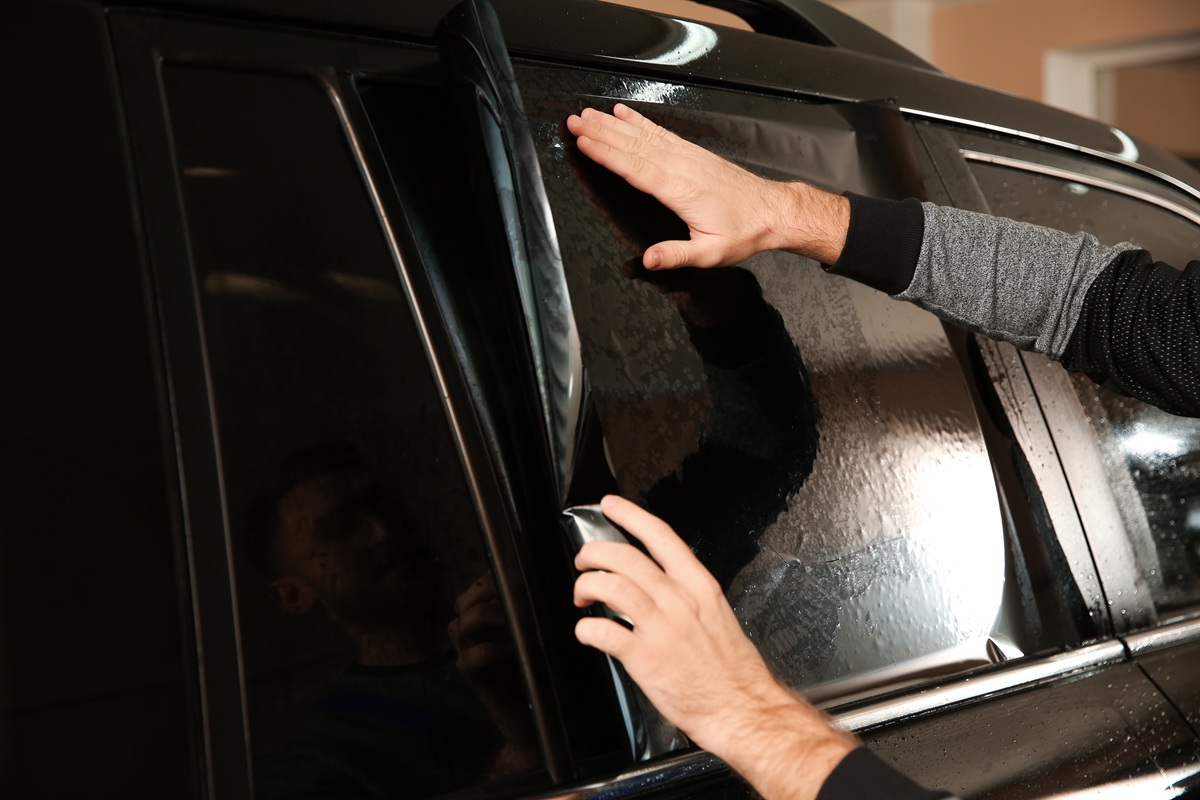
A darker tint can reduce more visible light, but that does not automatically mean it rejects more heat.
Window tint performance depends on the film’s construction and how it handles different parts of solar energy. Two films can look very different in shade while delivering similar heat-management performance. In some cases, a lighter high-performance film can manage heat more effectively than a much darker basic film.
This is why choosing tint by shade alone can lead to the wrong decision. The type of film matters too, which is why it helps to understand the differences between ceramic, carbon, and dyed automotive window tint before comparing shade options.
If your main goal is a cooler cabin, look beyond how dark the film appears. The more useful comparison is how the film is engineered to handle solar energy, including its overall heat-rejection performance.
Why Tint Darkness and Heat Rejection Are Different
Tint darkness is usually described by VLT, or Visible Light Transmission. VLT tells you how much visible light passes through the film and glass. A lower VLT means a darker appearance.
Heat rejection is different. It depends on how the film is designed to manage solar energy, not simply how much visible light it blocks.
That means two films with the same VLT can perform differently when it comes to heat. It also means a darker film is not automatically the better choice for keeping your vehicle comfortable.
If heat reduction is your priority, shade should be only one part of the comparison. Film construction and performance specifications matter more than appearance alone.
What VLT Actually Tells You
VLT, or Visible Light Transmission, measures how much visible light passes through your vehicle’s glass and window film.
For example, a lower VLT means less visible light gets through, so the tint appears darker. A higher VLT allows more visible light through and creates a lighter appearance.
What VLT does not tell you is the film’s total heat-rejection performance.
That is where drivers often get tripped up. A darker number can look more protective, but VLT mainly describes appearance and visible-light transmission. It should not be used by itself to judge how well a film will manage heat.
When comparing tint options, VLT helps you choose the look and visibility level you want. Heat performance needs to be evaluated separately.
What Actually Determines How Much Heat Window Tint Rejects
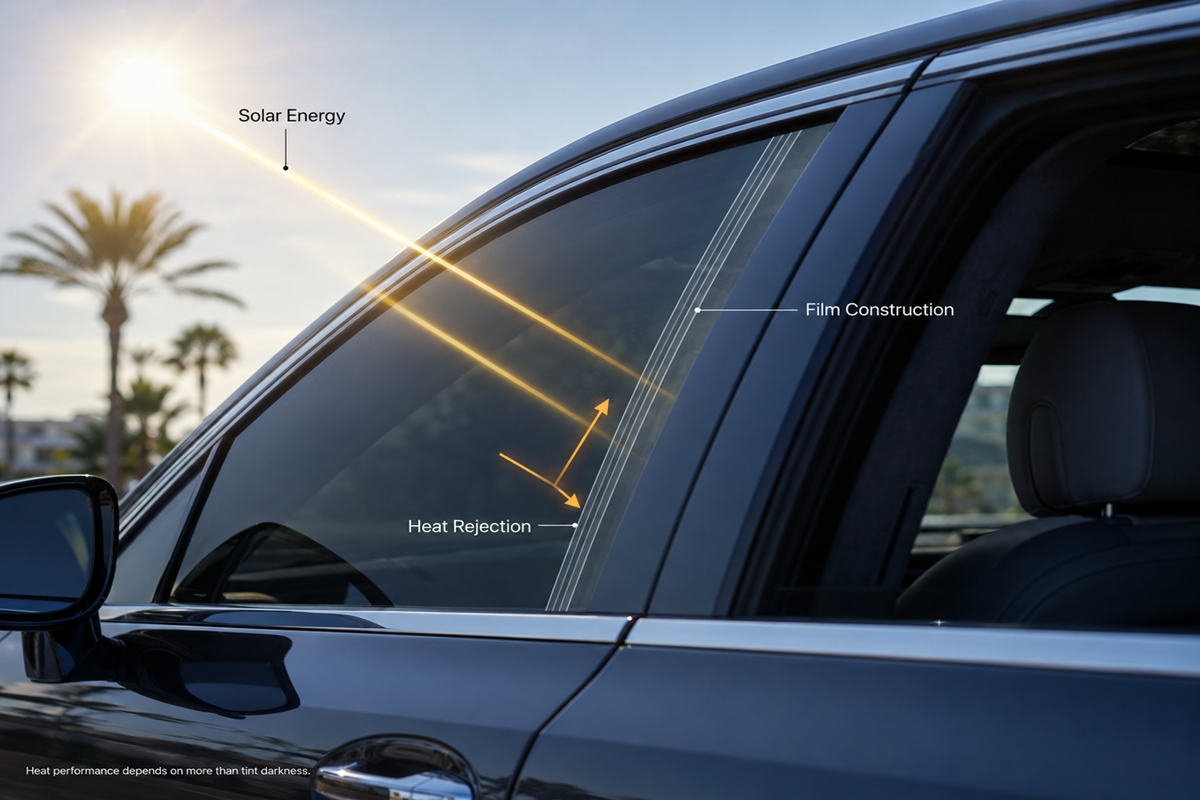
Heat performance depends on the film’s construction and how it interacts with solar energy.
When comparing automotive window tint, look beyond darkness and pay attention to performance specifications such as total solar energy rejected and infrared rejection. These measurements help show how the film handles heat-producing energy rather than simply how dark the glass looks.
Film type matters too. Ceramic, carbon, and dyed films are built differently, so they can deliver different levels of heat management even at similar shades.
That is why a professional comparison should focus on both the film technology and its measured performance. Shade still matters for appearance, privacy, and visibility, but it should not be treated as the main indicator of heat protection.
Why a Lighter Ceramic Tint Can Outperform a Darker Dyed Tint
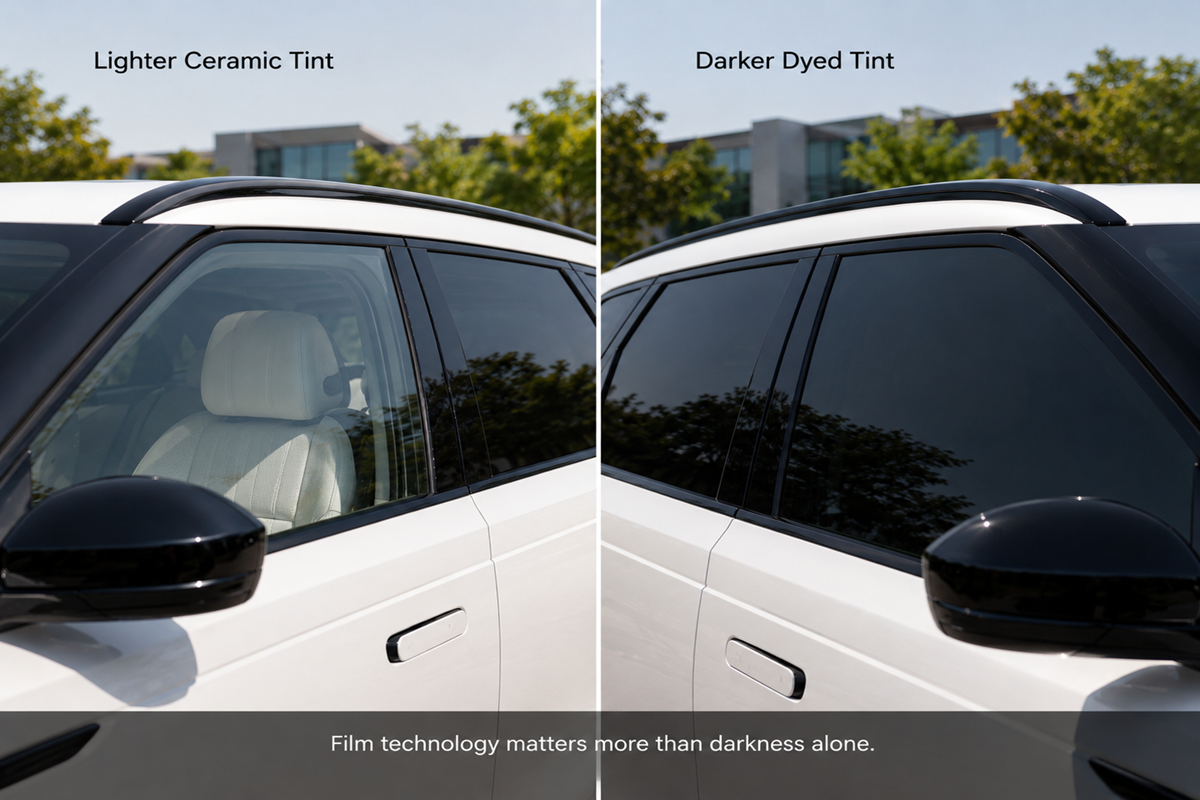
A lighter ceramic film can sometimes manage heat more effectively than a darker dyed film because the two products rely on different film technologies.
Dyed film primarily changes the appearance of the glass and reduces visible light. Ceramic film is engineered differently and can be designed to manage more solar energy without needing to be extremely dark.
That means you should not judge performance by appearance alone. A dark film may look more aggressive, but a lighter high-performance film may provide the better balance of comfort, visibility, and heat management.
The right comparison is between the actual film specifications, not simply which option looks darker.
What Is TSER, and Why Should Drivers Pay Attention to It?
TSER stands for Total Solar Energy Rejected. It measures how much of the sun’s total energy a window film helps reject.
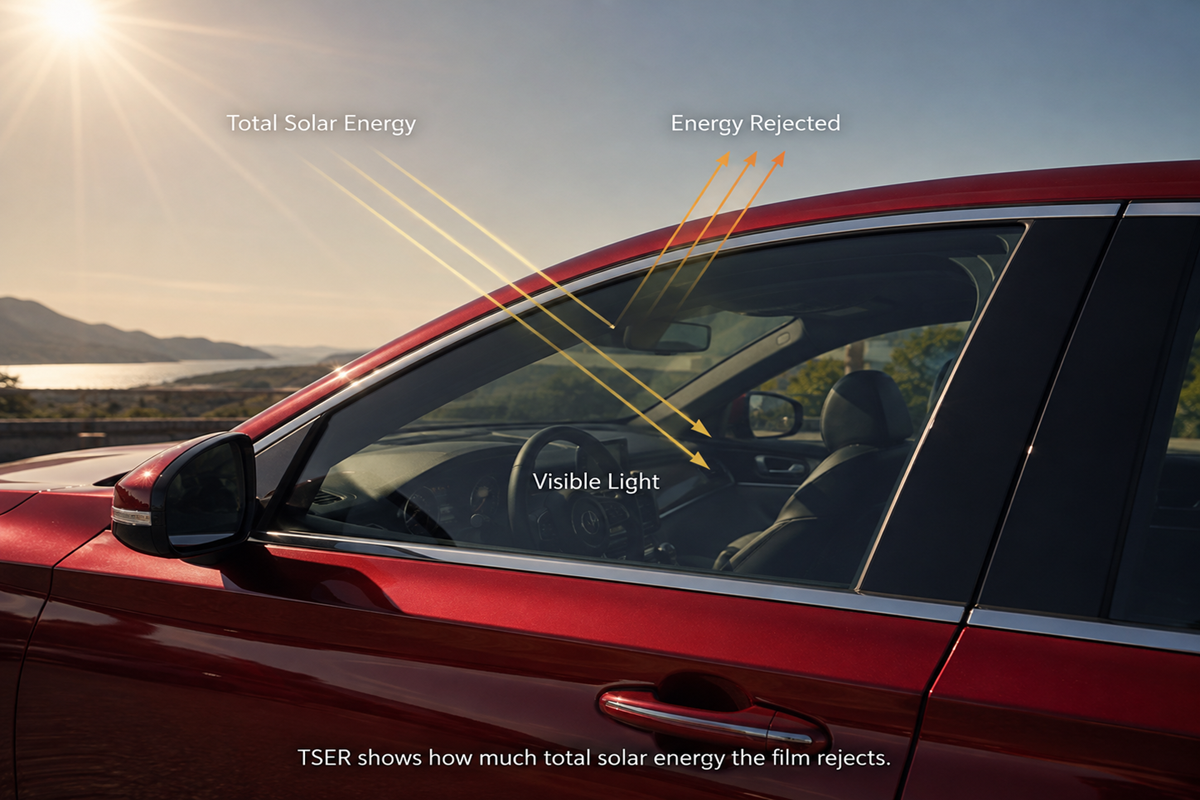
This makes TSER useful when heat reduction is one of your main priorities. Unlike VLT, which focuses on visible light, TSER looks at overall solar-energy performance.
A higher TSER generally indicates that the film rejects more total solar energy. That gives you a more meaningful way to compare heat performance between films than simply looking at how dark each one appears.
When you are choosing tint for comfort, compare TSER alongside other specifications and your preferred VLT. That gives you a clearer picture of how the film is expected to perform and how it will look on your vehicle.
Does Going Darker Provide Any Benefits?
Yes. A darker tint can still make sense when your goals include reducing visible glare, increasing privacy, or creating a darker appearance.
Those benefits are separate from heat rejection.
If you prefer a darker look, that can be part of the decision. The key is to avoid treating darkness as proof of better thermal performance. A film should be chosen based on the balance you want between appearance, visibility, comfort, and measured performance.
This is also where legal limits matter. The appropriate shade depends on where the film is installed and the tint laws that apply to your vehicle, so darkness should be chosen with both performance and compliance in mind.
When Darker Tint Can Create Visibility Tradeoffs
As tint gets darker, less visible light passes through the glass. That can affect how clearly you see through the windows, especially at night or in low-light conditions.
For some drivers, that tradeoff is acceptable. For others, it can make everyday driving less comfortable.
This is why the darkest available option is not automatically the smartest choice. Your tint should match how you actually use the vehicle, including nighttime driving, local road conditions, appearance preferences, and applicable tint laws.
The goal is to choose a shade that gives you the privacy and look you want without sacrificing more visibility than necessary.
What Should You Compare If Heat Reduction Is Your Priority?
If your main goal is a cooler cabin, compare the film’s performance instead of choosing by shade alone.
Focus on:
Total Solar Energy Rejected (TSER)
Infrared rejection
Film construction and technology
VLT for appearance and visibility
The manufacturer’s stated performance specifications
These measurements give you a clearer picture of what the film is designed to do.
The best choice is the one that balances heat management with the visibility, appearance, and privacy you want. A darker film may fit your style, but the performance data should guide the decision when comfort is the priority.
How to Choose the Right Balance of Heat Protection, Visibility, Privacy, and Appearance
There is no single tint shade that works best for every driver.
Start with your main priority. If heat management matters most, compare the film’s performance specifications first. Then decide how dark you want the glass based on visibility, privacy, appearance, and the legal limits that apply to your vehicle.
For example, a driver who spends a lot of time on the road at night may prefer a lighter shade with stronger heat-management performance. Another driver may place more value on privacy and a darker appearance.
The right choice comes from balancing all of those factors instead of using darkness as the shortcut.
That is where a consultation helps. A professional installer can walk you through the film options, explain the tradeoffs, and help you choose a combination that fits how you actually drive.
Frequently Asked Questions
Does darker tint always keep a car cooler?
No. Darker tint reduces more visible light, but heat performance depends on the film’s construction and solar-energy rejection.
Is ceramic tint always darker than dyed tint?
No. Ceramic films are available in different shades. A lighter ceramic film can still provide strong heat-management performance depending on its specifications.
Should I choose tint based on VLT alone?
No. VLT tells you how much visible light passes through the glass. For heat performance, also compare TSER, infrared rejection, and the film’s overall construction.
Ready to Choose the Right Window Tint for Your Vehicle?
Choosing the right tint comes down to more than picking a darker shade. You want a film that fits your goals for heat management, visibility, privacy, and appearance.
At The Tint Smith, we help you compare your options and understand the differences before you make a decision. If you are considering automotive window tint for your vehicle, schedule an appointment or call us to discuss what makes the most sense for how you drive.
[Schedule Your Automotive Window Tint Appointment]