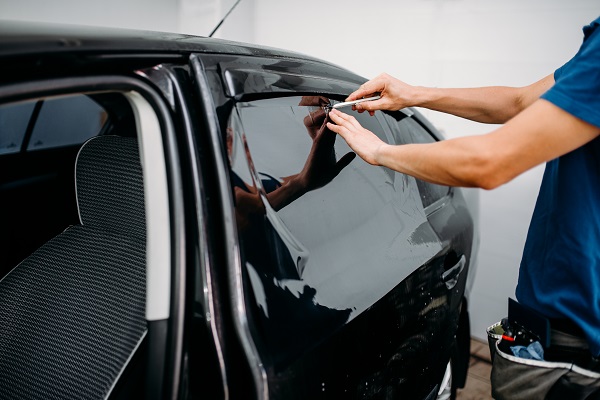
Automotive Window Tint Guide: Ceramic vs Carbon vs Dyed Tint Explained
Automotive window tint is not just about making your vehicle darker. The right film reduces heat, blocks harmful UV rays, protects your interior, and improves long-term driving comfort. The wrong film fades, bubbles, or underperforms when you need it most.
If you’ve ever wondered whether you need dyed, carbon, or ceramic tint, this guide will walk you through it clearly. No hype. Just measurable differences and practical decision-making.
What Does Automotive Window Tint Actually Do?
Automotive window tint reduces heat, blocks ultraviolet (UV) radiation, minimizes glare, and protects your vehicle’s interior from long-term damage. Performance depends on the film’s construction and the quality of installation.
Let’s break that down.
Heat Rejection
Quality window films reduce solar heat by blocking infrared energy. This keeps cabin temperatures more stable and reduces strain on your air conditioning system.
UV Protection
Most premium films block up to 99% of harmful UV rays. UV exposure causes interior fading, dashboard cracking, and upholstery breakdown over time.
Glare Reduction
Tint reduces harsh sunlight and headlight glare, improving visibility and reducing eye fatigue.
Interior Preservation
By limiting heat and UV exposure, tint helps preserve leather, plastics, electronics, and trim — protecting long-term resale value.
Which Automotive Window Tint Is Best?
If your priority is maximum heat rejection, long-term durability, and overall driving comfort, ceramic window tint is typically the best-performing option for most drivers. Carbon tint offers strong performance at a lower price point, while dyed film is primarily an appearance-focused upgrade with limited heat reduction.
The right tint depends on:
how much heat reduction you want
how long you plan to keep the vehicle
your daily driving conditions
your visibility preferences
your long-term expectations for performance
Many drivers assume darker tint automatically means better heat rejection. In reality, modern ceramic films can reject significantly more infrared heat than darker low-performance films while maintaining better visibility.
Here’s a simplified breakdown of the most common automotive window tint types:
The goal is not simply darker glass. The goal is creating a cooler, more comfortable vehicle while protecting the interior and improving the driving experience over time.
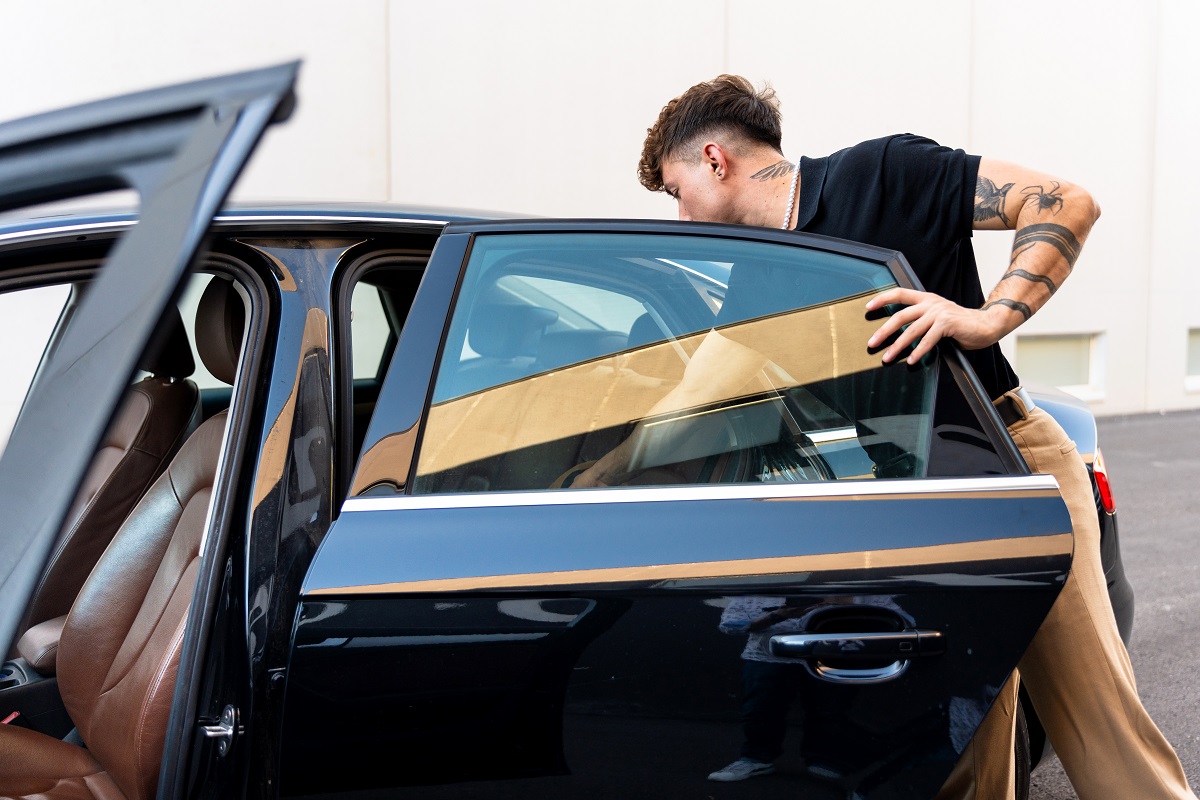
What Are the Main Types of Automotive Window Tint?
There are four primary types of automotive window tint: dyed, metalized, carbon, and ceramic. Each differs in construction, performance, and longevity.
What Is Dyed Window Tint?
Dyed window tint uses a dyed layer to absorb sunlight and darken the glass.
Pros:
Lower cost
Non-reflective appearance
Basic glare reduction
Cons:
Limited heat rejection
Can fade or turn purple over time
Shorter lifespan
Best for: Drivers prioritizing appearance over performance.
Dyed film is typically considered entry-level. It improves aesthetics but does not deliver strong long-term heat rejection.
What Is Metalized Window Tint?
Metalized film contains microscopic metallic particles that reflect heat and sunlight.
Pros:
Better heat rejection than dyed
Durable construction
Scratch-resistant
Cons:
Can interfere with GPS, Bluetooth, radio, and cell signals
Slightly reflective appearance
Metalized tint improves performance but may not be ideal for vehicles heavily dependent on electronic connectivity.
What Is Carbon Window Tint?
Carbon tint uses carbon particles to block infrared heat without metal components.
Pros:
Strong heat rejection
No signal interference
Fade-resistant
Matte, factory-style finish
Cons:
Higher cost than dyed or metalized
Less infrared rejection than ceramic
Carbon film offers a strong balance of performance and value. It’s often chosen by drivers who want reliable heat reduction without stepping into premium ceramic pricing.
What Is Ceramic Window Tint?
Ceramic window tint uses nano-ceramic technology to block infrared heat and UV rays without metal or dye.
Pros:
Maximum heat rejection
Blocks up to 99% of UV rays
No signal interference
Will not fade
Superior clarity
Cons:
Highest upfront investment
Ceramic tint is engineered for long-term performance. It offers the highest infrared rejection and the most consistent durability over time.
If your primary goal is heat reduction and long-term interior protection, ceramic is typically the strongest performer.
Ceramic vs Carbon vs Dyed Window Tint — What’s the Difference?
Here’s a simplified comparison:
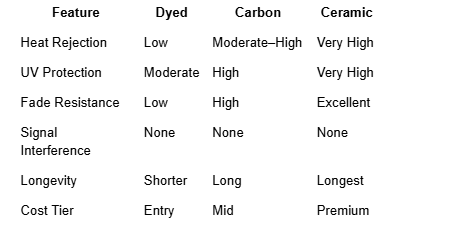
Ceramic vs Carbon vs Dyed Window Tint: What’s the Real Difference?
Not all automotive window tint performs the same. Some films are designed primarily for appearance, while others are engineered for long-term heat rejection, UV protection, and driving comfort.
Understanding the differences between ceramic, carbon, and dyed tint helps you choose the right balance between performance, longevity, and budget.
Ceramic Window Tint
Ceramic tint is considered the highest-performing automotive window film available today. It uses non-metallic ceramic particles to block infrared heat and harmful UV rays without interfering with electronic signals.
Ceramic film is best for drivers who want:
maximum heat rejection
better cabin comfort
reduced interior fading
long-term durability
clear visibility without excessive darkness
Because ceramic tint blocks infrared heat efficiently, it can improve comfort significantly during long drives and hot weather conditions.
Typical advantages include:
excellent heat rejection
strong UV protection
reduced glare
no signal interference
long lifespan
minimal fading over time
The primary trade-off is higher upfront cost compared to other film types.
Carbon Window Tint
Carbon window tint offers strong performance without the premium pricing associated with ceramic film. It contains carbon-based particles that help reduce heat while maintaining a deep, non-reflective appearance.
Carbon tint is often chosen by drivers who want:
strong overall performance
improved comfort
better fade resistance
a balanced long-term value option
Compared to dyed film, carbon tint provides noticeably better heat rejection and durability.
Typical advantages include:
solid heat reduction
matte appearance
no electronic interference
improved longevity compared to dyed tint
strong value-to-performance ratio
Carbon film is often considered the middle ground between basic dyed film and premium ceramic film.
Dyed Window Tint
Dyed window tint is typically the most affordable option. It primarily improves appearance and reduces visible glare but provides less heat rejection than carbon or ceramic films.
Dyed tint is commonly chosen for:
cosmetic upgrades
darker appearance
lower upfront investment
While dyed film can improve privacy and appearance, it generally does not deliver the same long-term performance as higher-end films.
Typical limitations include:
lower heat rejection
shorter lifespan
higher risk of fading over time
reduced infrared protection
Lower-quality dyed films are also more likely to discolor, bubble, or turn purple as they age.
The best automotive window tint depends on what matters most to you. Some drivers prioritize appearance. Others prioritize heat rejection, long-term comfort, or preserving the interior over time.
The most important step is choosing a film that matches your driving habits, expectations, and long-term goals rather than choosing based on darkness alone.
Does Darker Window Tint Block More Heat?
Not necessarily.
One of the most common misconceptions about automotive window tint is that darker film automatically provides better heat rejection. In reality, the performance of window tint depends more on the film technology than the darkness level alone.
Modern high-performance films can reject significant amounts of infrared heat while maintaining a lighter appearance and better visibility.
For example, a lighter ceramic tint can often outperform a darker dyed film when it comes to:
heat reduction
cabin comfort
UV protection
glare control
long-term performance
This is because ceramic films are engineered to block infrared heat energy rather than simply darkening the glass.
Visible Light Transmission (VLT) determines how dark the tint appears, but VLT alone does not measure heat rejection performance.
A darker film may reduce brightness, but that does not automatically mean it blocks more heat.
What Actually Impacts Heat Rejection?
Several factors determine how well window tint performs:
film construction
infrared rejection capability
UV rejection performance
film quality
installation quality
High-quality ceramic films are designed to target heat-producing infrared rays directly, which is why they often deliver stronger comfort improvements even at lighter shades.
Why This Matters for Daily Driving
Choosing tint based only on darkness can lead to disappointment.
Some drivers install very dark low-performance film expecting a cooler cabin, only to realize the vehicle still feels excessively hot during long drives or direct sun exposure.
The better approach is evaluating:
total heat rejection
infrared rejection
driving visibility
long-term durability
comfort expectations
For many drivers, the goal is not simply darker windows. The goal is creating a more comfortable driving experience without sacrificing visibility or long-term performance.
Why This Matters for Daily Driving
Choosing tint based only on darkness can lead to disappointment.
Some drivers install very dark low-performance film expecting a cooler cabin, only to realize the vehicle still feels excessively hot during long drives or direct sun exposure.
The better approach is evaluating:
total heat rejection
infrared rejection
driving visibility
long-term durability
comfort expectations
For many drivers, the goal is not simply darker windows. The goal is creating a more comfortable driving experience without sacrificing visibility or long-term performance.
What Window Tint Percentage Makes the Most Sense?
The best window tint percentage depends on how you drive, how much visibility you prefer, and the level of heat reduction you expect.
Some drivers prioritize a darker appearance. Others care more about comfort, glare reduction, or maintaining clear visibility during nighttime driving.
Choosing the right balance matters more than simply choosing the darkest option available.
Understanding Tint Percentage
Window tint percentage refers to Visible Light Transmission (VLT), which measures how much visible light passes through the glass.
Lower percentages appear darker because they allow less visible light into the vehicle.
What Different Tint Percentages Are Commonly Used For
70% Tint
70% tint is often chosen when drivers want:
heat rejection
UV protection
minimal appearance change
improved windshield comfort
This percentage maintains very high visibility while still improving comfort.
50% Tint
50% tint offers:
a subtle appearance upgrade
improved glare reduction
balanced daytime and nighttime visibility
Drivers who prefer a lighter, cleaner appearance often choose this range.
35% Tint
35% tint is one of the most popular choices because it balances:
appearance
privacy
visibility
comfort
It creates a noticeable tinted look without becoming excessively dark for most drivers.
20% Tint
20% tint creates a darker appearance and increased privacy.
Drivers commonly choose this level when they want:
a more aggressive appearance
stronger daytime glare reduction
additional privacy
Nighttime visibility becomes more limited at this percentage, especially in poorly lit areas.
5% Tint
5% tint is extremely dark and is often referred to as “limo tint.”
While it provides maximum privacy, it can significantly reduce nighttime visibility and may not be practical for all driving conditions.
Many drivers discover that extremely dark tint is not necessary when using high-performance ceramic film.
The Best Tint Percentage Is Not Always the Darkest
Many drivers assume darker tint automatically creates better comfort. In reality, film quality and infrared rejection matter far more than darkness alone.
A lighter high-performance ceramic film can often provide:
better heat rejection
better visibility
better long-term comfort
Than a much darker low-performance film.
The goal is finding the right balance between:
visibility
comfort
appearance
privacy
long-term driving experience
Instead of choosing darkness alone.
Factors to Consider Before Choosing Tint Percentage
Before selecting a tint percentage, it helps to consider:
how often you drive at night
your sensitivity to heat and glare
visibility preferences
the appearance you want
local tint regulations
whether the vehicle already has factory-tinted glass
The right combination of film type and tint percentage should improve comfort without creating unnecessary visibility limitations.
How Long Does Automotive Window Tint Last?
The lifespan of automotive window tint depends on three primary factors:
film quality
installation quality
long-term exposure conditions
High-quality professionally installed window film can last well over a decade, while lower-grade film may begin fading, bubbling, or discoloring much sooner.
Not all tint is designed for long-term performance.
Higher-performance films are engineered to resist:
fading
adhesive breakdown
discoloration
bubbling
prolonged UV exposure
This is one reason many drivers choose ceramic or carbon film when planning to keep their vehicle long term.
Choose the Right Window Tint for Your Vehicle?
The right tint depends on your priorities.
Ask yourself:
Is heat your primary concern?
Are you protecting a new vehicle?
How long will you keep the car?
Do you rely heavily on GPS and mobile connectivity?
Are you focused on long-term resale value?
If heat and longevity matter most, ceramic is typically the logical choice.
If you want balanced performance at a moderate investment, carbon often makes sense.
If appearance is the only goal, dyed may be sufficient; but understand the trade-offs.
The right solution depends on your goals.
What to Look for in a Professional Window Tint Installation
The quality of the installation often matters just as much as the quality of the film itself.
Even high-performance window tint can fail prematurely if the installation process is rushed, contaminated, or improperly handled.
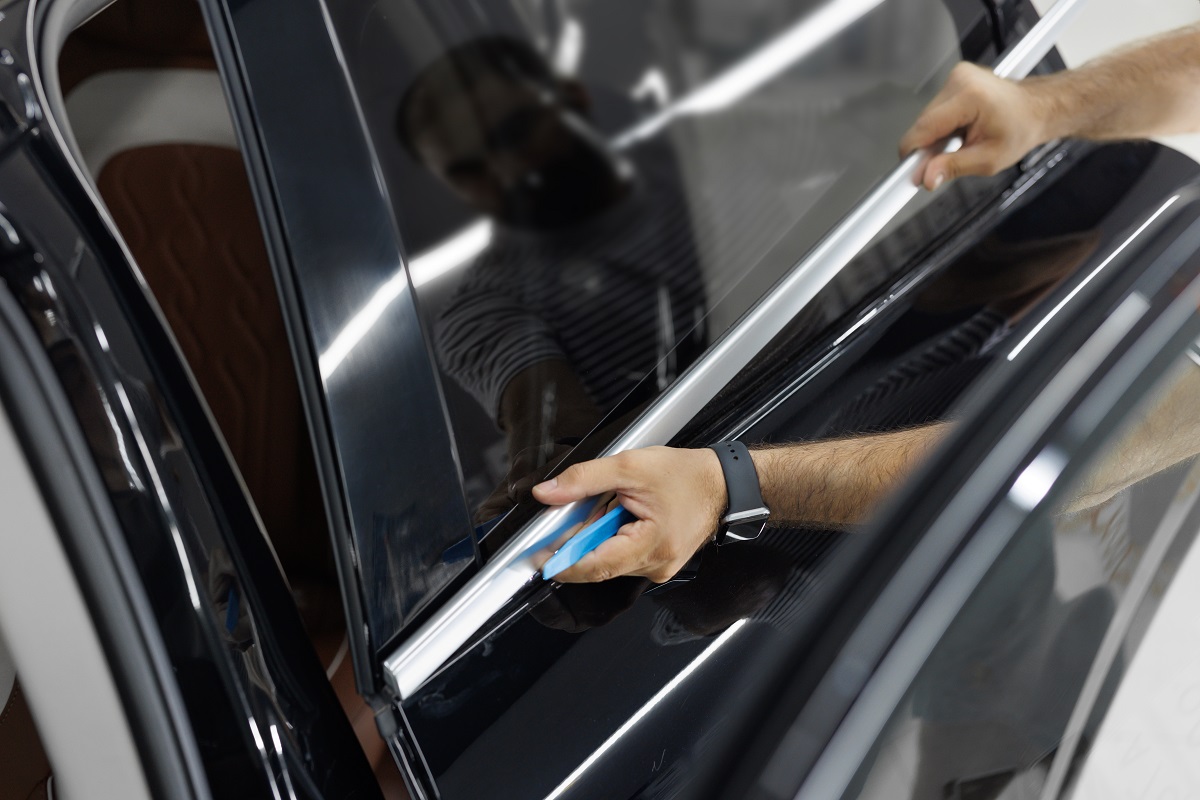
Professional installation is about more than applying film to glass. It is about precision, preparation, and long-term performance.
Clean Installation Environment
A controlled installation environment helps reduce contamination during the tinting process.
Dust, debris, and airborne particles can become trapped beneath the film if the work area is not properly maintained.
A professional tint installation should prioritize:
cleanliness
controlled preparation
attention to detail
proper curing conditions
This helps create a smoother, cleaner final result.
Precise Film Alignment
Quality installation becomes visible in the details.
Properly installed window tint should have:
clean edges
smooth alignment
consistent coverage
minimal visible gaps
no excessive trimming marks
Precision matters because poor alignment becomes more noticeable over time, especially around edges and curved glass areas.
Proper Surface Preparation
Glass preparation directly affects how well window film bonds and performs long term.
Before installation, the glass should be thoroughly cleaned to remove:
dust
oils
residue
contaminants
adhesive buildup
Rushed preparation often leads to:
bubbling
peeling
trapped contamination
uneven curing
Surface preparation is one of the biggest differences between short-term results and long-term performance.
Understanding Normal Curing vs Installation Problems
Newly installed tint may appear slightly hazy or develop small water pockets during the curing process. This is normal and typically improves as the film fully settles.
However, issues such as:
excessive contamination
peeling edges
distorted appearance
large persistent bubbles
May indicate poor installation quality.
A professional installer should clearly explain:
curing expectations
aftercare instructions
drying timelines
warranty coverage
Before the vehicle leaves the shop.
Why Experience Matters
Modern vehicles often include:
complex window shapes
sensitive electronics
advanced glass systems
tight edge tolerances
Professional installation experience helps reduce the risk of:
damage
improper fitment
inconsistent appearance
premature film failure
The goal is not simply darker glass. The goal is a clean, long-lasting installation that improves comfort, appearance, and protection without compromising quality.
Window Tint Should Look Intentional, Not Rushed
A professionally installed film should feel integrated into the vehicle, not added as an afterthought.
The best installations typically go unnoticed because:
the film sits cleanly
the edges look precise
the finish remains consistent
the vehicle maintains a refined appearance
Quality window tint should enhance the driving experience while preserving the overall appearance and long-term value of the vehicle.
Why Does Installation Quality Matter More Than Film Brand?
Even the highest-grade film will fail if installed incorrectly.
Professional installation ensures:
Exact edge alignment
Proper heat shrinking for curved glass
Contamination-free application
Seamless appearance
Long-term adhesion
Bubbling and peeling are often installation failures, not film failures.
Precision matters.
How Much Does Automotive Window Tint Cost?
Cost varies based on:
Film technology (dyed vs carbon vs ceramic)
Vehicle size and window count
Installation complexity
Warranty coverage
Entry-level dyed films cost less upfront but may require replacement sooner.
Premium ceramic costs more initially but often provides better long-term value due to durability and performance.
The lowest price rarely delivers the longest performance.
Why Cheap Window Tint Often Fails
Many window tint problems are not caused by tint itself. They are caused by low-quality film, rushed installation, or both.
A tint job may look acceptable initially, then begin failing months later through:
bubbling
peeling
discoloration
adhesive haze
fading
shrinking edges
This is one reason lower-cost installations often become more expensive long term.
What Causes Window Tint to Turn Purple?
Lower-grade dyed films commonly fade as they absorb repeated UV exposure over time.
As the dye begins breaking down, the film can shift into a purple or uneven appearance. This is especially common with low-cost films that prioritize appearance over long-term performance.
Modern higher-quality films are engineered to resist:
discoloration
UV breakdown
fading
adhesive deterioration
Much more effectively.
Why Bubbling and Peeling Happens
Window tint bubbling usually occurs when:
contamination becomes trapped beneath the film
adhesive quality is poor
installation procedures are rushed
improper curing occurs
Peeling edges often result from:
poor film alignment
improper trimming
weak adhesive systems
inadequate surface preparation
Once bubbling or peeling begins, replacement is often the only long-term solution.
Low-Performance Film Often Creates Disappointment
Some drivers choose tint primarily based on price, expecting all film to perform similarly.
Then months later they realize:
the cabin still feels excessively hot
glare remains uncomfortable
the film is fading
visibility becomes distorted
the appearance no longer looks clean
This creates frustration because removing and replacing failed tint adds:
additional labor
additional downtime
additional expense
Long-Term Performance Starts With Better Materials
Higher-quality automotive window films are designed to maintain:
stable appearance
consistent heat rejection
optical clarity
UV protection
adhesive performance
For years rather than months.
That does not mean every driver needs the most expensive film available. It means understanding the trade-offs between short-term savings and long-term performance.
Installation Quality Matters Just as Much as Film Quality
Even premium film can fail if the installation process is rushed or contaminated.
Long-term results depend on:
proper glass preparation
clean installation conditions
precision alignment
correct curing procedures
installer experience
The goal is not simply installing darker glass. The goal is delivering a clean, durable result that continues performing over time.
The Cheapest Tint Is Rarely the Best Long-Term Value
Lower-cost tint may reduce upfront expense, but replacement costs often erase those savings later.
Many drivers eventually choose higher-performance film after experiencing:
fading
bubbling
poor heat rejection
short lifespan
disappointing appearance retention
A properly installed high-quality film typically delivers:
longer durability
better comfort
improved appearance retention
stronger long-term value
Especially for drivers planning to keep their vehicle for years.
Automotive Window Tint FAQ
What is the best window tint for heat rejection?
Ceramic window tint provides the highest heat rejection because it blocks a greater percentage of infrared radiation. It outperforms dyed and carbon films in measurable thermal performance and maintains clarity without signal interference.
Ceramic films are engineered for consistent long-term heat reduction.
Is ceramic window tint worth the money?
Ceramic window tint is worth it for drivers prioritizing heat reduction, UV protection, and long-term durability. While it has a higher upfront cost, its performance and lifespan often make it the most cost-effective option over time.
It delivers measurable protection, not just darker glass.
Does ceramic tint fade?
No, ceramic tint does not fade like dyed films. It contains non-metal, non-dye nano-ceramic particles that maintain color stability and performance for many years.
Fading is typically associated with lower-grade dyed films.
What’s the difference between carbon and ceramic tint?
Carbon tint blocks heat using carbon particles, while ceramic tint uses nano-ceramic technology to block more infrared radiation. Ceramic typically provides higher heat rejection and greater clarity, but at a higher cost.
Both avoid signal interference.
What percent tint blocks the most heat?
Heat rejection depends on film technology, not darkness. A high-quality ceramic 50% film can block more heat than a darker dyed film. Performance specifications matter more than shade percentage.
Always review infrared rejection ratings.
How long does automotive window tint last?
Dyed films may last 3–7 years, while carbon and ceramic films often last 10 years or longer. Installation quality significantly impacts longevity.
Professional installation increases lifespan.
Does window tint reduce UV damage?
Yes. Most premium automotive window films block up to 99% of harmful UV rays, helping protect skin and prevent interior fading, cracking, and material breakdown.
UV protection is one of tint’s most valuable benefits.
Can window tint interfere with cell phone signal?
Metalized window tint can interfere with electronic signals. Carbon and ceramic films do not contain metal and will not disrupt GPS, Bluetooth, or cellular connectivity.
Film construction determines signal performance.
Is darker tint better for heat rejection?
No. Darker tint reduces visible light but does not automatically improve heat rejection. Film technology determines thermal performance.
Infrared blocking capability is the key metric.
How long does window tint take to install?
Most full-vehicle automotive window tint installations take between 2 and 4 hours, depending on vehicle size and film type.
Precision installation takes time.
What’s the difference between factory tint and window film?
Factory-tinted glass and aftermarket window film are not the same thing.
Many vehicles come with factory-tinted rear windows, but factory tint is typically designed primarily for appearance and privacy rather than heat rejection.
In most cases, factory tint is created by adding pigment directly into the glass during manufacturing. While it darkens the appearance of the glass, it usually does not provide the same level of:
infrared heat rejection
UV protection
glare reduction
overall thermal performance
As high-performance automotive window film.
What Automotive Window Film Adds
Professional window film is applied directly to the glass surface and is engineered specifically for performance.
Depending on the film type, automotive window tint can help improve:
heat rejection
UV blocking
glare control
cabin comfort
interior protection
High-performance ceramic films are especially effective at reducing infrared heat while maintaining visibility and optical clarity.
Why Some Drivers Still Add Film to Factory-Tinted Glass
Many drivers assume factory-tinted rear glass already provides full heat protection. Then they realize:
the cabin still becomes excessively hot
glare remains uncomfortable
the interior continues absorbing heat
front windows perform differently than rear windows
Adding high-performance window film over factory-tinted glass helps create more balanced performance throughout the vehicle.
This is especially common for drivers looking to improve:
overall comfort
heat reduction
UV protection
long-term interior preservation
Final Thoughts: Choosing Tint Is a Long-Term Decision
Automotive window tint is a performance upgrade when chosen correctly. The right film improves comfort, protects your investment, and delivers measurable results for years.
Not all tint is built the same. And not all installations are equal.
Choose based on performance, longevity, and professional application — not just shade or price.
Ready to Choose the Right Automotive Window Tint?
The right window tint is not about going darker. It’s about selecting the film that delivers the performance your vehicle actually needs.
If heat reduction, long-term durability, and interior protection matter to you, a short consultation can clarify your best option in minutes.
We’ll walk through:
Your driving habits
Your performance priorities
Film technology differences
Shade options and legal considerations
Long-term value expectations
No pressure. No exaggerated claims. Just clear guidance so you can make a confident decision.
Schedule a Vehicle Protection Consultation and get a professional recommendation tailored to your vehicle and goals.
Protect your comfort. Preserve your interior. Install it correctly the first time.