

What Causes Swirl Marks on Modern Clear Coats
What Causes Swirl Marks on Modern Clear Coats
You walk up to your vehicle on a bright afternoon, look across the hood, and notice a network of fine, spiderweb-like scratches catching the sunlight. It's a frustrating realization, especially when you take pride in what you drive and expect the finish to maintain its original edge. You wash the paint regularly to keep it looking sharp, but the surface still looks worn and dull under direct light. The problem isn't that you are washing the car too often, but rather the methods being used to handle the paint.
As we break down in our core preservation guide, The Hidden Cost of Skipping Proper Detailing, swirl marks are not just topical dirt you can wipe away. They are microscopic, V-shaped gouges physically cut into the top protective layer of your vehicle's clear coat. When direct sunlight hits these sharp, uneven edges, the light refracts and creates the illusion of circular scratches spread across the panels. Because modern automotive clear coats are engineered to flex with temperature changes, they are relatively soft and highly susceptible to this kind of mechanical damage.
Regular washing remains an absolute requirement to prevent road grime, bird droppings, and environmental fallout from chemically etching into the paint over time. However, improper washing methods introduce abrasive dirt directly against that sensitive clear coat, causing permanent marring. To preserve the long-term value and appearance of your vehicle, you have to understand the difference between safely removing surface contamination and unintentionally grinding it into the finish.
How Automated Friction and Touchless Washes Degrade Vehicle Finishes
Pulling into a drive-through car wash feels like an easy way to save time on a busy afternoon. You get a quick wash in three minutes, and the car looks clean from ten feet away. What you don't see immediately is how both friction brushes and touchless chemical cycles break down your finish every time you drive through.
Why Spinning Friction Brushes Function Like Fine-Grit Sandpaper
Automated friction washes rely on heavy synthetic curtains and spinning plastic bristles to scrub road dirt off your vehicle. The problem is that these brushes never get cleaned between cars. Every bit of mud, sand, and abrasive brake dust from the work truck ahead of you in line clings to those bristles, turning them into high-speed sandpaper against your clear coat.
As those brushes spin at high speeds, they whip trapped grit directly across your paint panels. This rotational friction cuts hundreds of tiny, shallow grooves into the top layer of the clear coat in a single pass. You leave the wash with clean paint, but you've traded surface dirt for permanent micro-scratches that dull your finish under direct sunlight.
Why Touchless Washes Rely on Harsh High-pH Chemical Cleaners
Many owners switch to touchless car washes thinking they've eliminated the risk of paint damage. While touchless systems don't drag physical brushes across your panels, they have to rely on aggressive chemistry to break down road grime without physical contact. To strip dirt away in seconds, these systems spray highly caustic, high-pH detergents alongside low-pH acid rinses.
These extreme chemicals quickly strip away any protective waxes or synthetic sealants you've applied to the surface. Over time, repeated exposure to caustic detergents dries out exterior rubber window gaskets and turns black plastic trim chalky and faded. Instead of preserving your vehicle, touchless cycles accelerate surface oxidation and leave the clear coat completely unprotected against the Georgia sun.
Why Traditional Waxes and Consumer Polishes Cannot Permanently Fix Swirl Marks
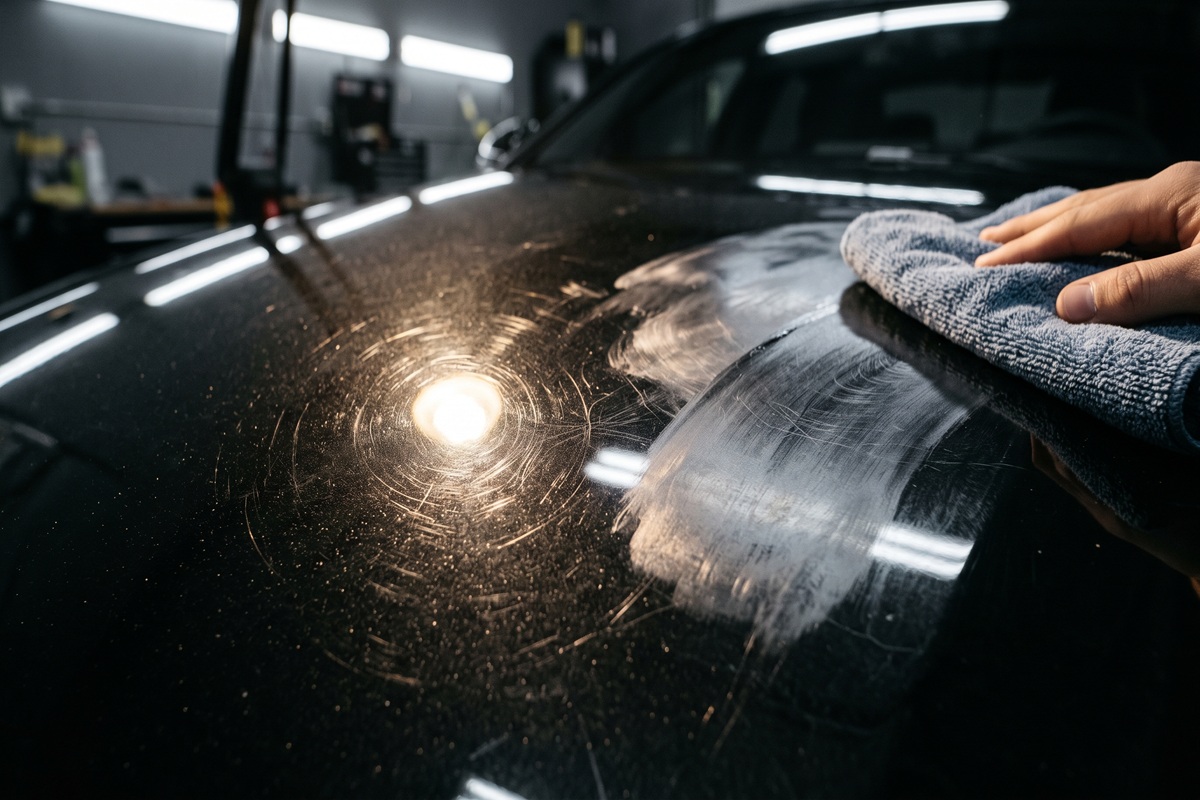
When swirl marks start clouding your finish, reaching for a bottle of paste wax or over-the-counter polish feels like the natural weekend solution. You spend hours washing, hand-applying the product, and buffing it off until the panels look deep and reflective again. The problem is that the improvement doesn't last, and those spiderweb scratches reappear after just a couple of rainstorms or washes.
Most consumer-grade waxes and quick detailers don't actually remove swirl marks. Instead, they rely on heavy fillers, oils, and silicone glazes that temporarily settle into the microscopic valleys cut into your clear coat. When sunlight hits the panels immediately after application, the filled grooves reflect light more evenly, creating the short-lived illusion that the scratches are gone. As soon as road heat, rain, and soap wash that temporary layer away, the underlying damage is exposed all over again.
Permanently fixing swirl marks requires mechanical leveling rather than cosmetic masking. Because a swirl mark is an actual physical cut in your paint, eliminating it means the surrounding clear coat must be leveled down to the lowest point of that scratch. You can't achieve that level of precision by hand with a microfiber applicator and store-bought liquid wax. Resolving surface defects for good demands controlled machine polishing that safely reshapes the clear coat while preserving its thickness.
How to Safely Hand Wash Your Vehicle to Prevent Paint Defects
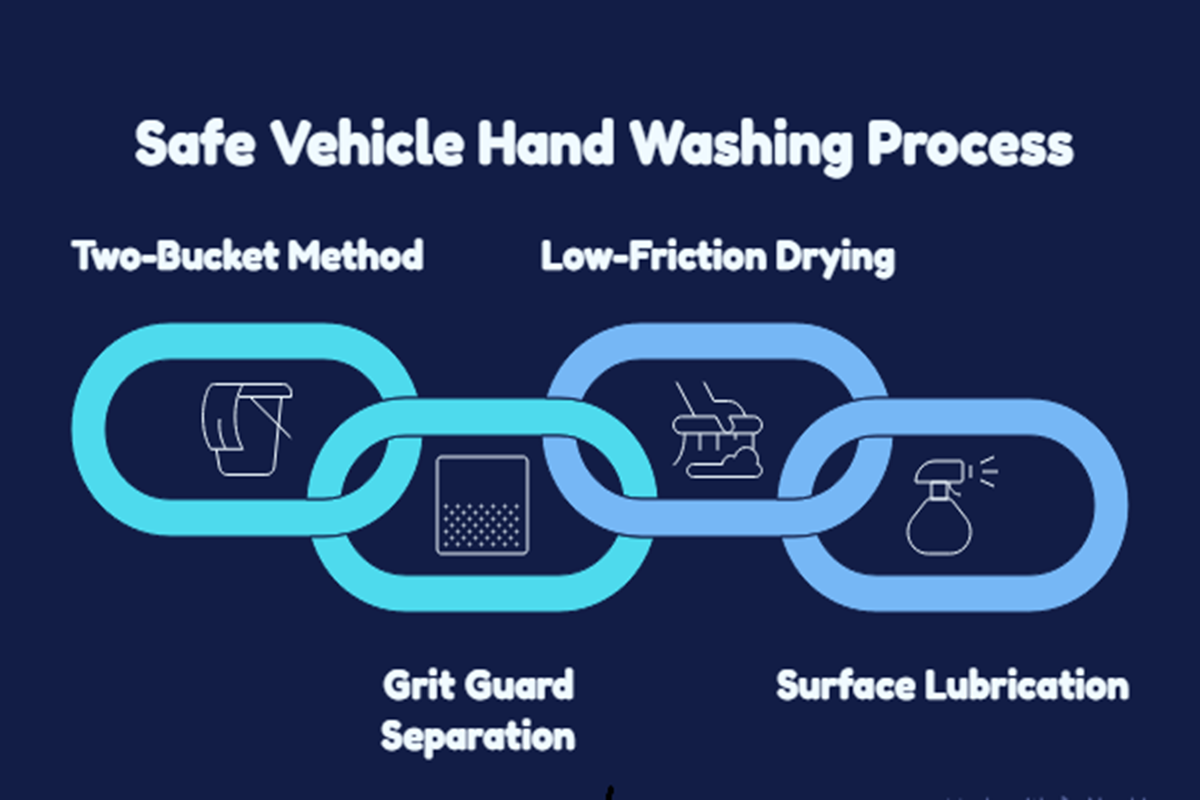
Washing your vehicle at home gives you complete control over what touches your clear coat, but good intentions still lead to damage without the right process. Most driveway swirl marks happen because abrasive road grime gets trapped in a wash sponge and dragged straight across clean panels. Adopting a safe hand-washing routine isolates abrasive road grit so it never gets reintroduced to the paint.
The Two-Bucket Method and Grit Guard Separation
The foundation of safe hand washing is separating clean soapy water from contaminated rinse water using two dedicated buckets. You fill one bucket with clean water and a pH-neutral automotive shampoo, and the second bucket with pure rinse water. A plastic grit guard sits at the bottom of each bucket to create a settling grid that traps heavy dirt, sand, and brake dust underneath.
When you pull your microfiber wash mitt off a panel, you plunge it straight into the rinse bucket and rub it against the submerged grit guard. That agitation dislodges abrasive particles, which sink to the bottom where the guard prevents them from floating back up into the mitt. Once the mitt is clean, you reload it from the soap bucket and move to the next panel, keeping foreign debris completely away from your clear coat.
Low-Friction Drying Techniques and Lubrication
Even if you wash your paint perfectly, using the wrong drying method will immediately put fine scratches back into the clear coat. Grabbing an old bath towel, a stiff squeegee, or a cheap chamois introduces dry friction that abrades the surface under pressure. Paint needs continuous lubrication during every phase of contact, especially when you are removing standing water.
The safest way to dry a panel is by using a dedicated, high-pile twisted-loop microfiber drying towel paired with a light mist of quick-detail spray. The detail spray acts as a slick lubricating barrier that cushions the towel as it glides, while the microfiber pulls water into its fibers without dragging. Working top to bottom with gentle, straight-line passes ensures your paint stays completely free of wash-induced marring.
How Machine Paint Correction and Ceramic Coatings Restore and Protect the Finish
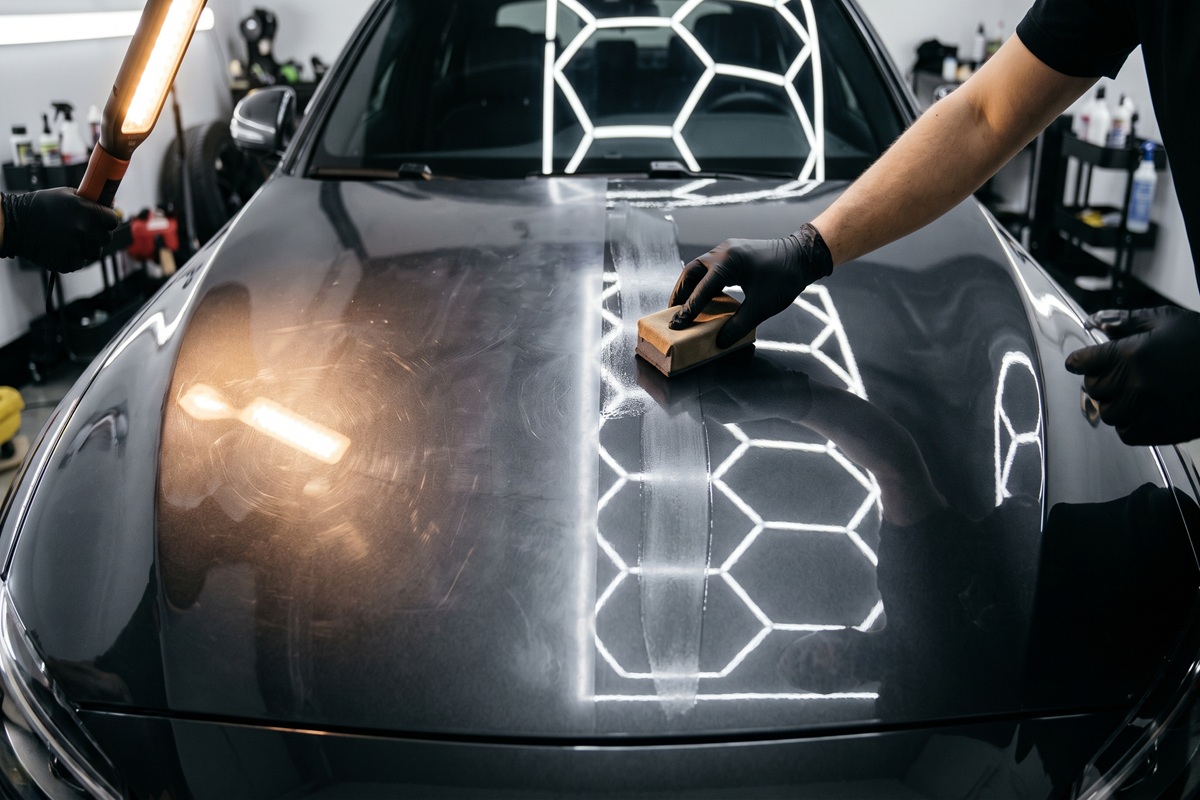
When your clear coat has already collected swirl marks, proper hand washing will keep things from getting worse, but it can't undo the existing damage. Because swirl marks are physical valleys cut into the clear coat, you have to level the surrounding finish before the paint will reflect true depth again. Machine paint correction and professional ceramic coatings work together as a complete restoration system, leveling out imperfections and locking in a durable defense layer.
Single-Stage vs. Multi-Stage Machine Paint Correction
Paint correction isn't a quick buff with a rotary wheel, and it certainly shouldn't involve an inexperienced technician practicing on your clear coat. True correction is a measured, surgical process using precision dual-action polishers, specialized foam or microfiber pads, and diminishing abrasive compounds. Before a pad ever touches your paint, a qualified technician measures the clear coat's thickness across every panel using a digital gauge to verify exactly how much material can be safely worked.
The severity of the defects determines whether your vehicle needs a single-stage or a multi-stage correction. A single-stage correction uses an all-in-one finishing polish to remove 50% to 70% of light surface hazing, bringing back rich gloss and clarity in a single pass. For heavier swirl marks and deeper clear coat scratches, a multi-stage correction uses a dedicated compounding pass to level out 85% to 95% of defects, followed by a secondary jewel-polishing stage that eliminates any remaining micro-marring.
How Ceramic Coating Simplifies Safe Maintenance
Once paint correction restores your clear coat to a level, mirror-like finish, leaving that bare paint exposed leaves it vulnerable to fresh damage. Traditional waxes melt away under the Georgia sun within weeks, leaving you back at square one. A professional ceramic coating forms a semi-permanent, chemically bonded layer of silicon dioxide across the leveled clear coat, creating a dense sacrificial barrier against bird droppings, bug splatter, and road salts.
Beyond environmental protection, a ceramic coating fundamentally changes how you wash your vehicle by dramatically reducing surface friction. The intense hydrophobic effect forces water to bead tightly and roll off, carrying loose road film and surface dust with it. Because grime has a hard time clinging to the slick ceramic surface, future two-bucket hand washes require almost zero scrubbing effort, keeping your restored finish safe from fresh wash-induced marring.
How Routine Detailing Preserves Long-Term Vehicle Condition and Resale Value
When you think of auto detailing as just a cosmetic luxury, it is easy to justify taking shortcuts or relying on cheap drive-through washes. The reality is that the condition of your clear coat directly impacts the long-term value, durability, and daily driving experience of your vehicle. Every micro-scratch and swirl mark degrades the structural integrity of the paint, making the underlying panels more susceptible to UV oxidation, chemical etching, and premature clear coat failure.
Proper detailing and surface protection shift vehicle ownership from reactive maintenance to a predictable preservation strategy. When you invest in professional paint correction and a ceramic coating, you are not just buying a shiny car for the weekend. You are actively preserving the physical condition of an expensive asset, ensuring that the vehicle looks intentional and holds maximum equity when it is finally time to trade it in or sell it.
Because this type of preservation prevents the heavy damage discussed in our core guide, The Hidden Cost of Skipping Proper Detailing, setting up a safe maintenance routine is one of the smartest investments you can make as an owner. You stop worrying about whether the local car wash is ruining your paint and start enjoying a consistently clean, protected vehicle that always looks exactly the way it should.
Professional Paint Inspection and Correction in Lawrenceville, Georgia
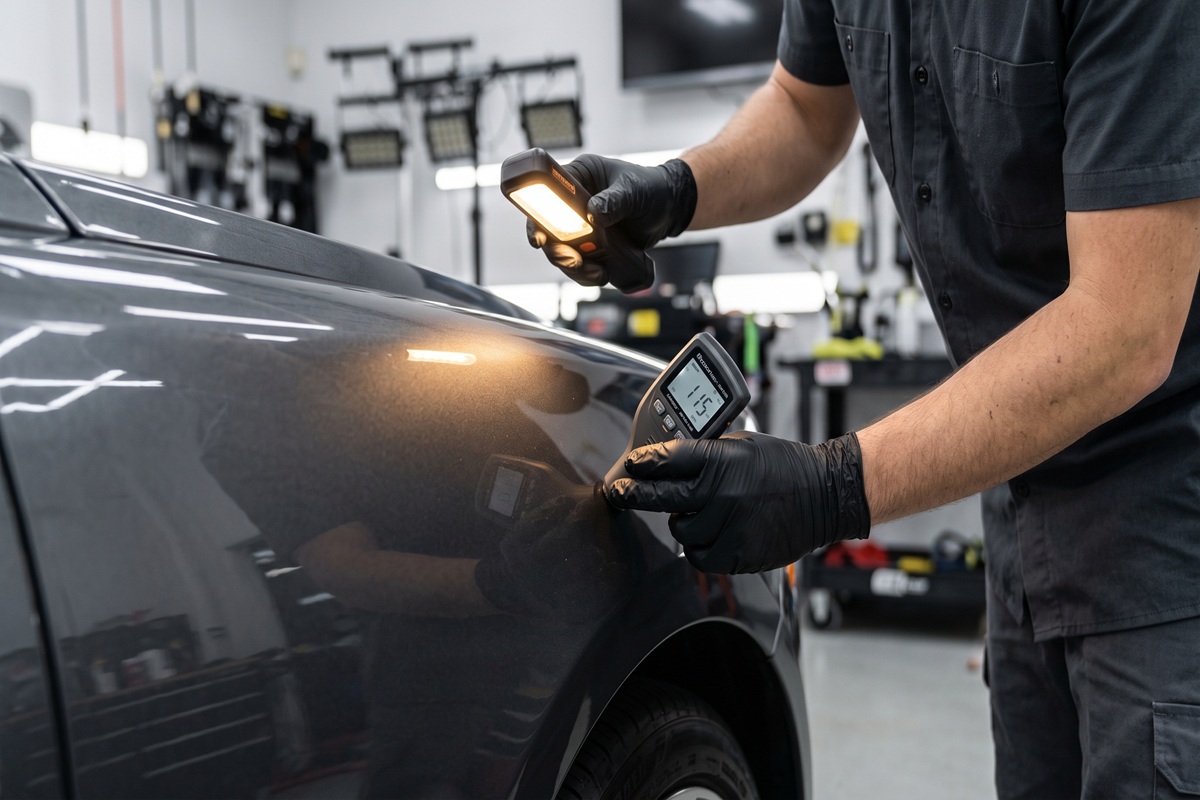
Determining the exact condition of your clear coat isn't something you can do with a quick glance in the driveway. True paint evaluation requires dedicated high-CRI inspection lights and digital paint depth gauges that reveal the true depth of surface scratches and measure remaining clear coat thickness. At The Tint Smith in Lawrenceville, Georgia, we take a diagnostic approach to your vehicle's finish before making any service recommendation.
We walk through the panels with you, explaining whether your finish requires a single-stage refinement to restore gloss or a multi-stage correction to eliminate heavier swirl marks. Our team focuses on precision craftsmanship and honest guidance rather than aggressive upselling or rushed jobs. We treat your vehicle as an investment that deserves to be protected properly the first time, ensuring the clear coat stays healthy and durable for the road ahead.
If you're tired of seeing spiderweb scratches dull your vehicle's finish, the next logical move is to have your paint inspected under proper lighting. Bring your vehicle by our Lawrenceville shop for an honest, hands-on paint assessment. We'll map out a clear preservation strategy that restores depth to your paint and locks in long-term protection with a professional ceramic coating.
Frequently Asked Questions About Drive-Through Car Washes and Paint Protection
Can Hand Polishing or Wax Remove Swirl Marks?
Hand polishing can't permanently remove swirl marks from automotive clear coat. Over-the-counter polishes and waxes contain cosmetic fillers and silicone oils that temporarily settle into surface scratches, creating a brief illusion of clarity that washes away within a couple of weeks. Permanently eliminating swirl marks requires controlled machine paint correction with measured abrasives to level the surrounding clear coat down to the base of each scratch.
Does a Ceramic Coating Prevent Scratches from Automatic Car Washes?
A professional ceramic coating adds a hard, protective barrier over your paint, but the coating doesn't make a vehicle scratch-proof against mechanical friction washes. When heavy automated brushes whip trapped road sand and brake dust across a coated panel at high speed, that abrasive force still cuts micro-scratches into the finish. Instead of defending against automated brushes, ceramic coatings are engineered to make gentle, two-bucket hand washes faster and significantly safer by shedding dirt effortlessly.
Are Touchless Car Washes Safe for Clear Coats and Protective Coatings?
Touchless car washes avoid physical brush scratches, but touchless wash systems rely on harsh, high-pH chemical soaps and acidic rinses to loosen road film. These caustic detergents gradually strip away protective waxes, accelerate the oxidation of delicate exterior plastics, and dry out rubber window seals over time. While an occasional touchless rinse is less damaging than a brush wash, relying on touchless bays as your primary routine isn't a safe preservation strategy.
How Often Should You Wash a Vehicle to Maintain the Paint?
Most daily-driven vehicles benefit from a thorough two-bucket hand wash every two to three weeks to prevent surface grime from bonding to the paint. If you're driving through heavy highway rain or notice bird droppings on a panel, you should rinse those contaminants away immediately before they chemically etch the clear coat. Pairing routine hand washing with a professional ceramic coating keeps the clear coat slick, ensuring that routine cleanings take minimal time and effort.