
Car Detailing vs. Ceramic Coating: What's the Difference & Which Do You Need?
Car detailing and ceramic coating are not the same service. Detailing cleans, restores, and refreshes your vehicle, while ceramic coating adds a protective layer that helps defend the paint against dirt, water, UV exposure, and daily wear.
The right choice depends on your vehicle’s condition and your goal. If your car looks dull, dirty, or neglected, start with detailing. If you want longer-lasting paint protection after the surface is cleaned and prepared, ceramic coating is the stronger option.
What Is Car Detailing?
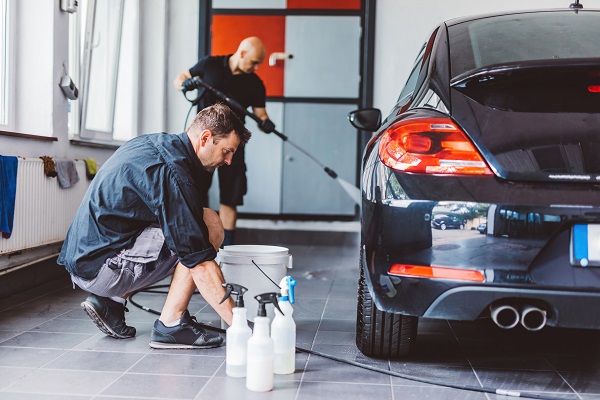
Car detailing is a deep cleaning and restoration service for your vehicle’s interior and exterior. It goes beyond a standard car wash by removing built-up dirt, stains, road grime, brake dust, and surface contaminants that affect how your vehicle looks and feels.
Exterior detailing usually includes washing, decontamination, polishing, and paint correction when needed. Interior detailing focuses on vacuuming, shampooing, stain removal, leather or fabric care, and cleaning hard-to-reach areas inside the cabin.
Detailing is the right choice when your vehicle needs to look cleaner, newer, and better maintained.
What Is Ceramic Coating?
Ceramic coating is a liquid polymer that bonds to your vehicle's clear coat, creating a durable layer of protection. Unlike waxes or sealants that wear off after a few months, a professionally applied ceramic coating can provide long-lasting protection with proper maintenance.
Its primary purpose is to shield your vehicle's paint from UV rays, oxidation, bird droppings, tree sap, road grime, and other environmental contaminants. The coating also creates a hydrophobic surface, causing water to bead and roll off while making the vehicle easier to wash and maintain.
It's important to understand that ceramic coating does not repair scratches, swirl marks, or paint defects. To achieve the best results, the paint should be thoroughly cleaned and, in most cases, professionally corrected before the coating is applied. This ensures the coating locks in a flawless finish rather than sealing in imperfections.
What Car Detailing Actually Does (And Where It Stops)
Car detailing feels like a reset button. You bring in a dull, slightly neglected vehicle and get it back looking sharp, glossy, and refreshed. That transformation is real. But it is often misunderstood. Detailing is a correction and cleaning process, not a long-term protection system.
What Happens During Detailing
A proper detailing job goes beyond a basic wash. It is a multi-step process designed to restore the vehicle’s appearance as close to “like new” as possible.
Here is what that usually includes:
Deep exterior wash to remove dirt, grime, and loose contaminants
Clay bar treatment to pull out embedded particles stuck in the paint
Paint correction to remove swirl marks, light scratches, and oxidation
Polishing to enhance gloss and clarity
Interior deep cleaning for surfaces, fabrics, and hard-to-reach areas
After this process, the car looks dramatically better. The paint feels smooth. The gloss returns. Colors look deeper. This is where most people stop thinking.
The Critical Limitation
Detailing improves the current condition. It does not lock that condition in. Once the process is done, your vehicle is exposed again to:
UV rays breaking down the clear coat
Road contaminants bonding to the surface
Water spots and mineral deposits
Micro-scratches from daily use and washing
Without protection, the surface starts degrading almost immediately. You might not notice it in a day. But within weeks, the signs come back:
Slight loss of gloss
Rougher texture
Light swirl marks under sunlight
The same cycle repeats.
Why This Matters
Detailing is often sold as the solution. In reality, it is the preparation step. Think of it this way:
Detailing gets your car to its best visible state. What you do next determines how long that state lasts. If nothing follows, you are essentially paying to temporarily reverse damage without preventing it from happening again. That is why many car owners find themselves detailing multiple times a year, chasing the same result, never actually preserving it.
The next section explains the system designed to stop that cycle.
WHAT PROFESSIONAL DETAILING ACTUALLY DOES
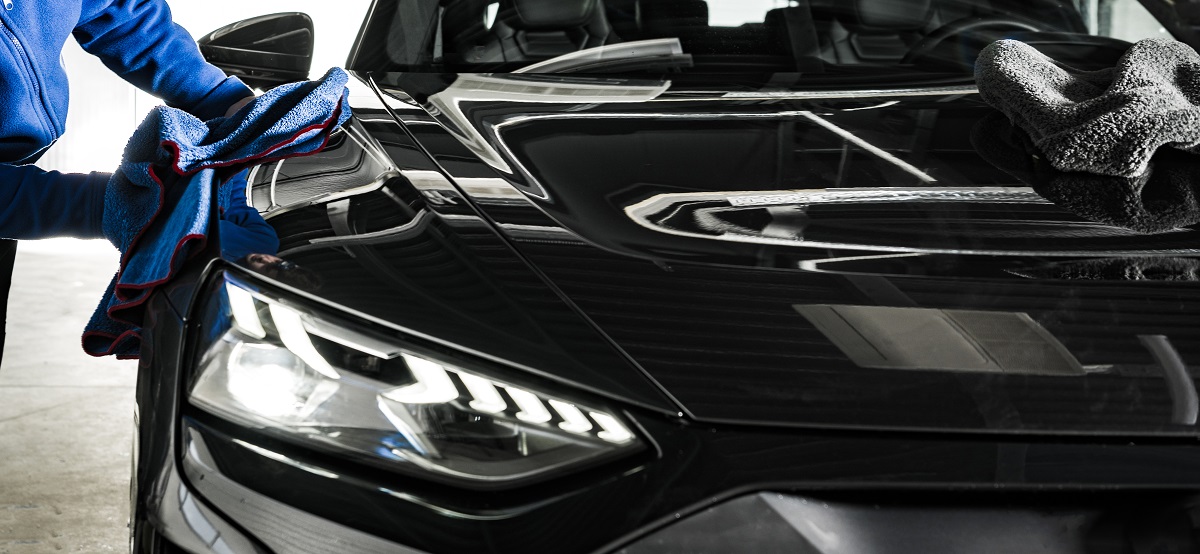
By the time most people consider detailing, the surface is already compromised. The paint may look acceptable from a distance, but up close, the defects are there. Swirls, haze, embedded contaminants, and uneven reflection. Professional detailing exists to correct that condition, not just clean it.
This is the point where the approach shifts from maintenance to restoration.
It Removes What Regular Washing Leaves Behind
Standard washing clears loose dirt. Detailing goes deeper. The process starts with full decontamination. This includes removing bonded particles that have attached themselves to the paint over time. These are the same contaminants that make the surface feel rough even after a wash.
Once removed, the paint becomes smooth again. More importantly, it becomes workable. Without this step, any form of protection applied later will sit on top of contamination, not the actual paint.
It Corrects Surface Defects
This is where the biggest visual difference happens. Through machine polishing, detailing removes or reduces:
Swirl marks caused by improper washing
Fine scratches that dull the finish
Oxidation that makes the paint look faded
Instead of hiding these issues, the process levels the surface to restore clarity and reflection. That’s why a properly detailed vehicle doesn’t just look clean. It looks sharp and defined under direct light.
It Restores Depth and Clarity
When defects are removed, the paint reflects light evenly again. You see deeper color. Cleaner reflections. A finish that looks closer to how the vehicle originally left the showroom. This is not achieved through products alone. It comes from correcting the surface so light behaves the way it should.
It Resets the Surface for Protection
This step is often overlooked, but it’s critical. Detailing prepares the vehicle for long-term protection. Without proper preparation, coatings and protective layers won’t bond correctly or perform as expected.
A clean but uncorrected surface still contains defects and contamination. A properly detailed surface is stripped, leveled, and ready to be protected. That’s the difference between temporary improvement and long-term results.
It Extends Beyond the Exterior
Professional detailing also addresses the interior at a deeper level. This includes:
Extracting embedded dirt from carpets and seats
Removing stains and buildup from high-contact areas
Treating surfaces to restore their original look and feel
Interior detailing is not about wiping surfaces. It’s about reversing the wear caused by daily use, especially in conditions where heat, moisture, and debris are constant.
At this stage, the vehicle is restored as much as possible. But it’s important to be clear about one thing.
Detailing does not protect the vehicle long-term. It fixes the current condition. It does not stop future damage. Without protection, the same cycle begins again. The surface will be exposed to the same elements, and over time, the same issues will return.
That’s where the next step becomes critical.
WHY CERAMIC COATING CHANGES EVERYTHING
At this point, the surface has been corrected. The paint is clean, smooth, and restored. It looks the way it should. But without protection, that condition won’t last.
This is where ceramic coating changes the entire equation. Instead of constantly fixing the surface, you start controlling what reaches it.
It Creates a Permanent Protective Layer
Ceramic coating bonds directly to the paint. It doesn’t sit on top like wax. It becomes a semi-permanent layer that shields the surface underneath. That layer acts as a barrier between your paint and the environment.
So instead of contaminants attaching directly to your clear coat, they interact with the coating first.
This reduces the impact of:
Dirt and road grime
Mineral deposits from water
Chemical contaminants from daily driving
The result is not just a cleaner car. It’s a surface that is harder to degrade.
It Reduces How Easily Contaminants Stick
One of the biggest advantages is how the surface behaves after coating. Without protection, contaminants bond quickly. With ceramic coating, the surface becomes more resistant. Dirt, dust, and water have a harder time sticking.
This leads to:
Less buildup over time
Easier washing
Reduced risk of scratches during cleaning
You’re not fighting the same level of resistance every time you maintain the car.
It Simplifies Maintenance
This is where most owners feel the difference immediately. Instead of needing frequent deep cleaning, maintenance becomes lighter and more efficient. The car stays cleaner longer, and when it does get dirty, it’s easier to restore. You spend less time trying to bring the finish back. It holds its condition with less effort.This is why ceramic coating is often misunderstood.
People think it’s about shine. In reality, it’s about consistency.
It Protects Against UV and Heat
Ceramic coating adds a layer of resistance against UV exposure.
It helps slow down:
Paint oxidation
Fading caused by sun exposure
Surface breakdown from constant heat
While it doesn’t eliminate exposure, it reduces how aggressively those elements affect the vehicle.
In environments with intense sun and heat, this becomes a critical advantage.
It Maintains Visual Quality Over Time
Because the surface is protected, the finish holds its clarity longer.
You don’t see the same rapid decline in gloss and reflection. The paint stays sharper. The vehicle maintains that “just detailed” look without needing constant correction.
This is where long-term value starts to show.
Instead of repeatedly paying to fix damage, you preserve the condition from the start.
What Ceramic Coating Does Not Do
This is important for setting the right expectations.
Ceramic coating is not:
Scratch-proof
Damage-proof
A replacement for proper maintenance
You can still introduce scratches with poor washing habits. You can still damage the surface through impact. What it does is reduce risk, not eliminate it. Ceramic coating shifts your approach from reactive to proactive. Instead of waiting for damage and correcting it later, you protect the surface early and slow the entire degradation process. That’s why it changes everything.
It’s not another step in cleaning .It’s the point where you stop chasing results and start maintaining them.
DETAILING VS CERAMIC COATING (CLARITY SECTION)
By this point, the difference should be clearer. But this is where most confusion still happens.
People hear both terms and assume they do the same thing. Or worse, they think one replaces the other.
They don’t.
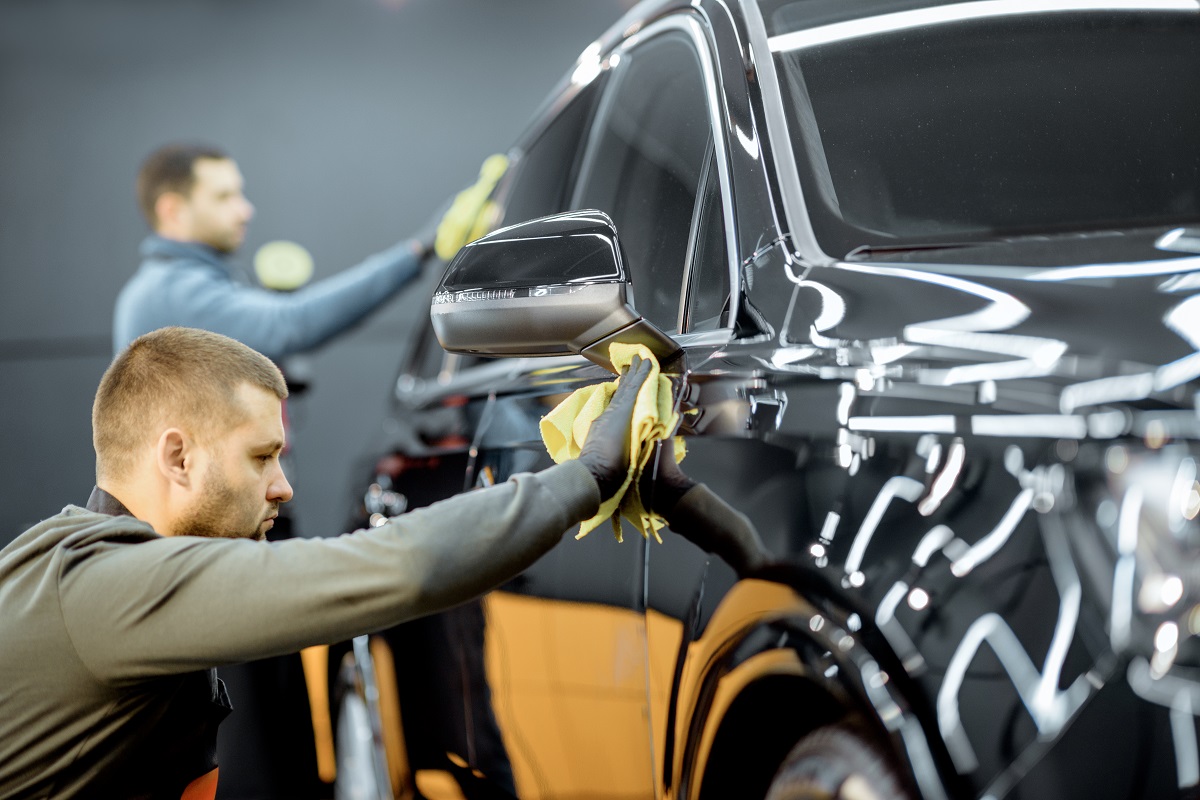
Detailing and ceramic coating serve two completely different roles. One fixes the current condition. The other protects it moving forward.
The Core Difference
The simplest way to understand it:
Detailing restores the surface
Ceramic coating protects the surface
You need both, but they happen in sequence, not as alternatives.
Do You Need Car Detailing Before Ceramic Coating?
Yes. In most cases, professional detailing is an essential step before applying a ceramic coating.
Ceramic coating forms a semi-permanent bond with your vehicle's clear coat. If the paint has dirt, oxidation, swirl marks, water spots, or other imperfections, the coating will seal those defects beneath the protective layer instead of hiding them.
A professional detailing service prepares the surface by removing contaminants and restoring the paint to the best possible condition. Depending on the vehicle, this preparation may include:
Hand washing and chemical decontamination
Clay bar treatment to remove embedded contaminants
Paint correction to reduce swirl marks and light scratches
Surface preparation to ensure proper coating adhesion
Once the paint is clean and properly prepared, the ceramic coating can bond more effectively, resulting in better durability, improved gloss, and longer-lasting protection.
Skipping the preparation stage may reduce the coating's performance and leave visible imperfections permanently locked beneath the protective layer. Investing in proper paint preparation helps you get the full value and lifespan from your ceramic coating.
Which Service Is Right for Your Vehicle?
Choose car detailing if your vehicle needs a deeper clean, stain removal, paint correction, or a full refresh inside and out. Detailing is best when the car looks dull, dirty, or worn from daily driving.
Choose ceramic coating if your paint is already in good condition and you want stronger long-term protection. Ceramic coating is ideal for drivers who want easier washing, better gloss, and added defense against UV rays, water spots, bird droppings, tree sap, and road grime.
For most vehicles, the best option is both. Detailing prepares the surface. Ceramic coating protects the finish after the paint has been properly cleaned and corrected.
Car Detailing vs. Ceramic Coating: What's the Difference?
While car detailing and ceramic coating work well together, they serve different purposes. Detailing restores your vehicle's appearance by cleaning and correcting the paint, while ceramic coating preserves that finish by adding long-term protection.
Which Service Should You Choose?
Choose car detailing if your vehicle needs a thorough cleaning, paint correction, or interior restoration.
Choose ceramic coating if your paint is already in excellent condition, or after detailing and paint correction, and you want long-lasting protection with easier maintenance.
For the best results, professional detailers often recommend detailing and paint correction before applying a ceramic coating. This creates a clean, smooth surface that allows the coating to bond properly and deliver maximum durability.
HOW TO CHOOSE THE RIGHT DETAILING / COATING PROVIDER
At this stage, the biggest risk is not doing nothing.
It’s choosing the wrong shop.
Because once someone works on your vehicle, the results are not easy to reverse. Poor polishing removes clear coat permanently. Improper coating locks in defects. Shortcuts create damage that costs more to fix later.
This is where most people make decisions based on the wrong signals.
Price. Convenience. Availability.
Those don’t tell you anything about the quality of work.
Look at the Process, Not the Promise
Any shop can say “ceramic coating” or “premium detailing.”
What matters is how they actually do the work.
A reliable provider should be able to clearly explain:
How they assess the vehicle before starting
What preparation steps are included
How they handle paint correction
What products or systems they use and why
If the process is vague, the results usually are too.
Clear process = controlled outcome.
Surface Preparation Is Everything
This is the part most people don’t see, but it determines everything that follows.
If a shop skips proper preparation, the coating will be applied over:
Swirl marks
Contaminants
Uneven surfaces
That means you’re paying to preserve flaws.
Ask directly:
Do you perform full decontamination?
Is paint correction included or optional?
How do you ensure the surface is ready before coating?
If these answers are unclear, that’s a red flag.
Proof Should Match the Claims
Photos and videos are easy to post. What matters is consistency.
Look for:
Close-up shots under proper lighting (not just glossy angles)
Before-and-after comparisons that show real correction
Results on different vehicle types and conditions
You want to see how they handle imperfect cars, not just already clean ones.
That’s where skill shows.
Experience Shows in the Details
Experienced providers don’t rely on scripts. They explain things clearly, set proper expectations, and don’t overpromise.
Pay attention to how they communicate:
Do they explain what the service does and does not do?
Do they set realistic outcomes?
Do they guide you based on your situation, not just sell packages?
This aligns with a professional approach. Clear, precise, no unnecessary hype.
Aftercare Support Matters
The job doesn’t end after the coating is applied.
Proper maintenance determines how long the results last.
A good provider will guide you on:
How to wash the vehicle safely
What to avoid after coating
How often to maintain the finish
If there’s no aftercare guidance, you’re left guessing. That’s where results start to drop.
The Real Risk
Choosing the wrong shop doesn’t just waste money.
It can lead to:
Permanent paint damage from aggressive polishing
Coatings applied on unprepared surfaces
Poor durability and early failure
At that point, fixing the problem costs more than doing it right the first time.
The right provider doesn’t just offer a service.
They follow a clear process, prepare the surface properly, set accurate expectations, and guide you beyond the initial work.
That’s how you protect both your vehicle and your investment.
Frequently Asked Questions
Is ceramic coating better than car detailing?
Ceramic coating is better for long-term paint protection, but detailing is better for cleaning and restoring the vehicle. The two services solve different problems and often work best together.
Does ceramic coating replace detailing?
No. Ceramic coating does not replace detailing. Your vehicle still needs regular washing and maintenance, but ceramic coating makes the surface easier to clean and helps protect the paint between details.
Should you detail a car before ceramic coating?
Yes. A vehicle should be properly cleaned, decontaminated, and corrected before ceramic coating. This helps the coating bond correctly and prevents defects from being sealed under the surface.
How long does ceramic coating last?
A professionally applied ceramic coating can last for years with proper maintenance. The exact lifespan depends on the coating used, vehicle condition, driving habits, and how well the vehicle is cared for.
Is ceramic coating worth it?
Ceramic coating is worth it if you want long-term paint protection, easier washing, stronger gloss, and better resistance against daily environmental exposure.
Take Control of Your Vehicle’s Condition
At this point, you already understand the difference.
Cleaning keeps your car presentable.
Protection keeps it from breaking down.
If you want your vehicle to stay sharp, consistent, and easier to maintain over time, the next step is simple. Get a proper assessment and see what your car actually needs.
Your vehicle deserves more than a quick wash and temporary shine. If you want a cleaner finish, stronger paint protection, and easier long-term maintenance, Tint Smith can help you choose the right service for your vehicle.
Schedule your car detailing or ceramic coating service today and give your vehicle the protection it needs to keep looking its best.